The status of the Zachełmie trackways remains a subject of active debate, making them not yet universally "confirmed" but widely recognized as a highly compelling piece of evidence in paleontological science.
While the original discoverers and prominent paleontologists like Per Ahlberg strongly support the tetrapod origin, a segment of the scientific community maintains skepticism, largely due to the radical implications the tracks have on our understanding of tetrapod evolution.
The Core Debate
• The Pro-Tetrapod Evidence: The researchers who discovered the tracks in Poland argue that the clear presence of digit impressions (toes and heel pads), a distinct diagonal quadrupedal walking gait, and the total absence of a body or tail drag are features unique to limbed land-dwellers. They argue these tracks could not have been left by lobe-finned fish.
• The Skeptical Counter-Argument: Critics (such as paleontologist Spencer Lucas) have countered that the structures could be undertracks (deformed lower layers of sediment), fish nesting mounds, or feeding traces left by primitive fish in shallow water. Some scientists have emphasized that without skeletal body fossils from the exact same time period, ichnotaxa (fossil tracks) are inherently difficult to prove definitively.
Why Is It So Controversial?
The primary reason for the pushback is the age of the tracks. Securely dated to roughly 395–397 million years old (Middle Devonian), the Zachełmie tracks predate famous transitional "fishapod" fossils like Tiktaalik by more than 10 million years.
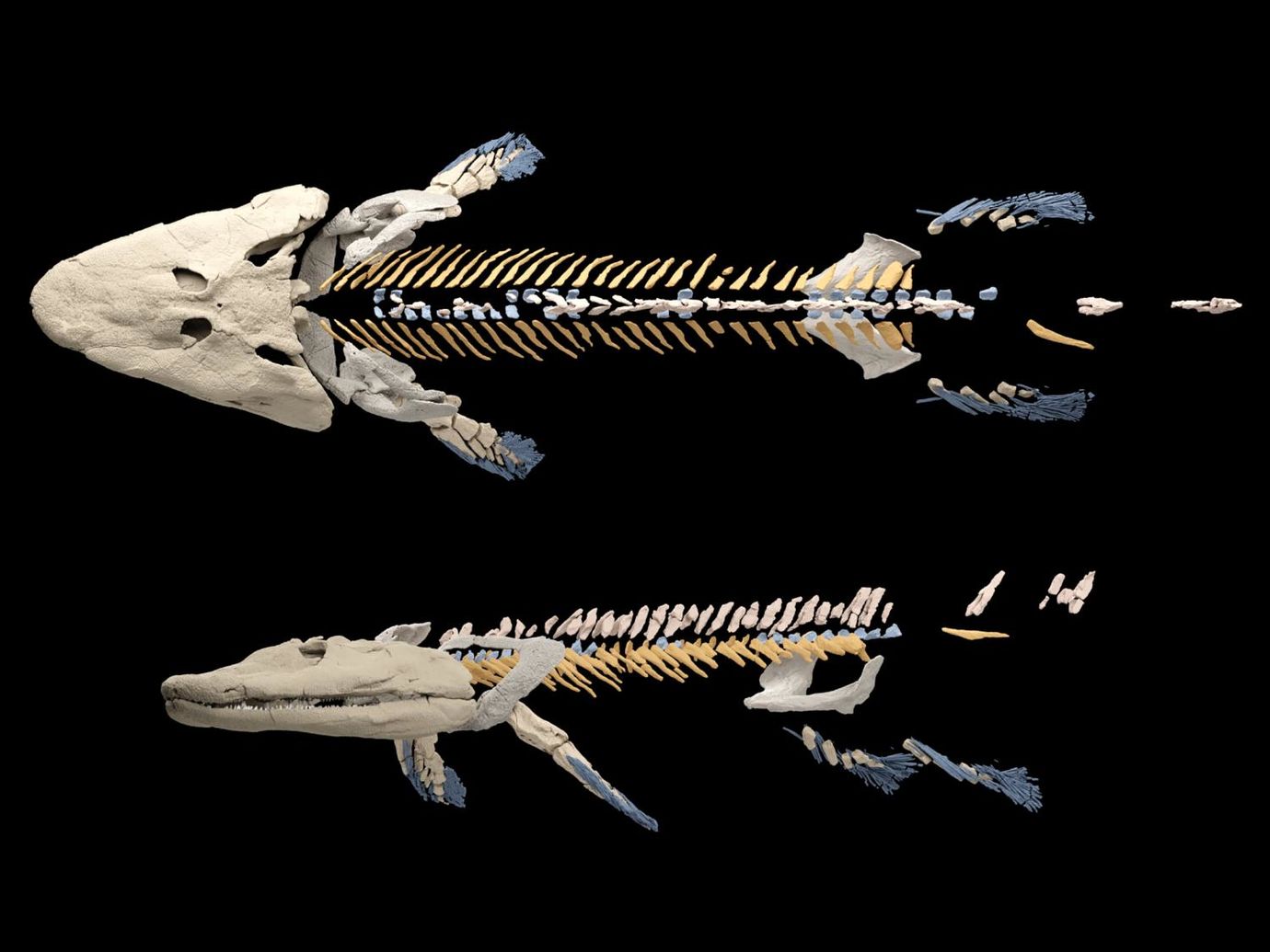
If confirmed as true tetrapod tracks, it means fully formed, limb-bearing land vertebrates were already walking around long before the species we once thought were their direct ancestors even existed. This forces scientists to rethink the timeline, implying that animals like Tiktaalik were late-surviving evolutionary "relics" or examples of convergent evolution rather than our direct ancestors.
Current Status
Subsequent geological studies have shifted to analyzing the environment where the tracks were made. While originally thought to be a marine tidal flat, newer sediment studies suggest the tracks were left in a freshwater environment of drying, ephemeral lakes. This shift heavily favors the original tetrapod hypothesis, as it matches an animal capable of walking on dry or semi-dry land. Despite this, until an actual skeleton from that era is dug up in Poland, the tracks will likely remain a brilliant but contested piece of the evolutionary puzzle.
Are you researching the Zachełmie tracks for a paleontology course, or are you looking into how they impact the evolutionary timeline of Tiktaalik? Let me know, and we can dive deeper into either topic!
•
Wikipedia
Zachelmie trackways - Wikipedia
Narkiewicz, co-author of the article on the Zachelmie trackways, claimed that the Polish "discovery has disproved the theory that ...
•
National Geographic
Fossil tracks push back the invasion of land by 18 million years | National Geographic
Discovery: 395-million-year-old tetrapod tracks in Poland's Zachelmie Quarry push back the land invasion by 18 million years. Cont... https://en.wikipedia.org/wiki/Zachelmie_trackways
Don't know where God is but the Devil is in the details